

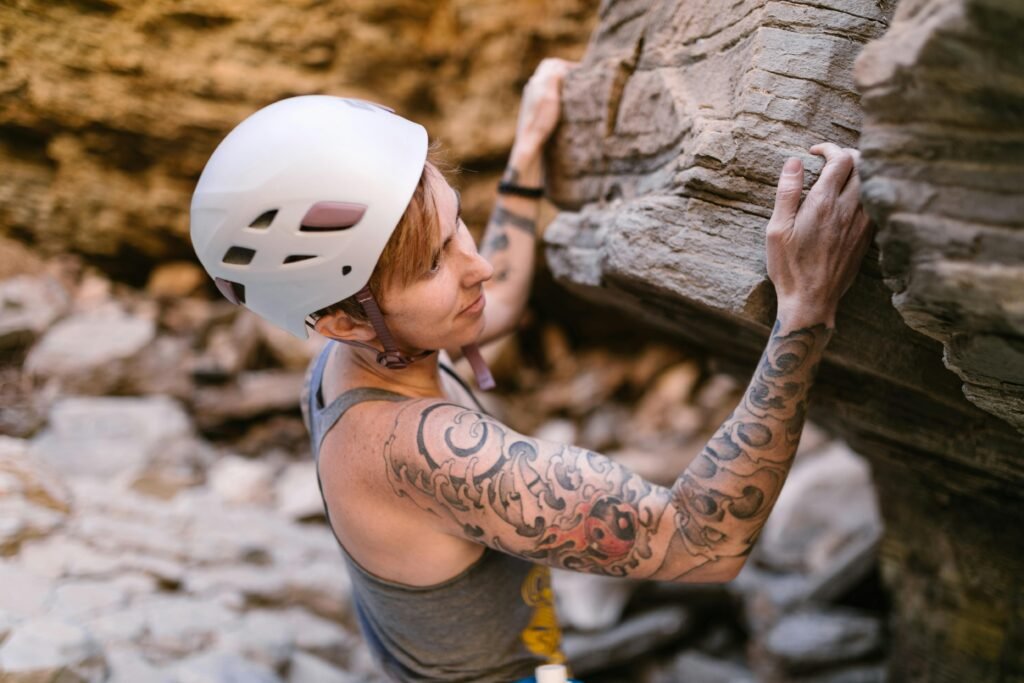
Whether you’re projecting a route at a climbing gym or scrambling up the ridgelines a short drive from Kitsap County, your body takes a serious beating. Climbing is one of the most grip-intensive, full-body demanding sports out there — and most climbers don’t give their muscles nearly as much recovery attention as they give their gear. That’s where sports massage comes in.
Why Climbing Is So Hard on the Body
Climbing loads your muscles in ways that most other sports don’t. Every pull, crimp, and lock-off puts enormous strain on specific muscle groups — often repetitively and for extended sessions. The most common areas where climbers accumulate tension and damage include:
- Forearms and finger flexors — responsible for grip strength and crimping, these muscles are almost constantly engaged while climbing and rarely get a real chance to fully release.
- Shoulders and rotator cuff — overhead reaching and pulling put repeated stress on the shoulder complex, which can lead to impingement and chronic tightness if left unaddressed.
- Lats and upper back — your lats are the powerhouse of nearly every climbing movement, and without regular release work, they can limit your shoulder mobility and pulling strength.
- Hip flexors and calves — footwork and high stepping demand a lot from your lower body, even when climbing feels like an upper-body sport.
How Sports Massage Helps Climbers
Sports massage isn’t less about relaxation than a spa massage; it’s targeted, functional therapy designed to keep your body performing at its best. Here’s what it actually does for climbers:
- Reduces forearm fatigue and pump — deep tissue work and myofascial release in the forearms helps break up adhesions and restore circulation, so you recover faster between sessions.
- Improves grip strength and finger flexibility — releasing the finger flexors and extensor muscles helps restore full range of motion and can actually improve how your fingers perform on small holds.
- Restores shoulder mobility — targeted work on the rotator cuff, pec minor, and lats can free up the shoulder joint and reduce the nagging aches that many climbers just learn to live with.
- Speeds up recovery between sessions — regular massage increases blood flow to fatigued tissues, helping clear metabolic waste and deliver nutrients that support tissue repair.
- Reduces injury risk — a lot of climbing injuries — pulley strains, tendinitis, and shoulder impingement — develop gradually from accumulated tension. Catching and addressing that tension early is one of the best injury prevention tools available.
When Should Climbers Get a Massage?
The short answer: more often than you probably think. Most climbers wait until something hurts. But if you’re climbing two or more days a week, your muscles are accumulating tension faster than rest alone can resolve it.
A good rule of thumb is to schedule a session every two to four weeks if you’re climbing regularly, or within 24 to 48 hours after a particularly hard day on the wall. If you’re dealing with something specific — nagging forearm tightness, shoulder discomfort, or reduced grip — don’t wait it out. Getting ahead of those issues early keeps small problems from becoming big ones.
Kitsap Climbers, We’ve Got You Covered
At Trailblazer Sports Massage in Poulsbo, we work with athletes of all kinds — and yes, that absolutely includes climbers. We understand the specific demands that climbing puts on your body, and we tailor every session to address what you actually need, not just a generic full-body rubdown.
Whether you’re a seasoned trad climber, a gym regular, or just getting into the sport, our team is here to help you recover faster, move better, and climb stronger. We serve the entire Kitsap County area, including Poulsbo, Bainbridge Island, Silverdale, and beyond.
Ready to feel the difference? Book your session at Trailblazer Sports Massage today and give your body the recovery it deserves.