

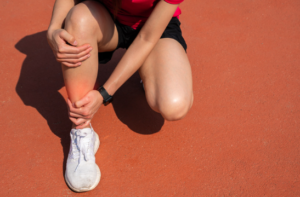
Shin splints – technically referred to as medial tibial stress syndrome (MTSS) – are one of the most common overuse injuries among runners, hikers, and athletes who increase training volume too quickly. That familiar ache along the front or inner border of your lower leg can disrupt training and, if ignored, lead to more significant issues. At Trailblazer Sports Massage, we see shin-splint patterns frequently, and with the right clinical approach, soft-tissue therapy can play a meaningful role in both managing symptoms and supporting long-term recovery.
What Actually Causes Shin Splints?
Shin splints are not a single tissue injury – they’re a stress-response pattern affecting the tibia and the muscles and fascia surrounding it. Repetitive loading, especially on hard surfaces or during sudden mileage increases, can create excessive traction on the tibial periosteum (the connective tissue covering the bone). Contributing factors include:
- Tight or overworked lower-leg musculature, especially the soleus, tibialis posterior, and tibialis anterior
- Weakness in the deep stabilizers of the foot and ankle
- Training errors, such as quick jumps in volume or intensity
- Foot mechanics, including excessive pronation
- Poor footwear or worn-down running shoes
- Limited ankle mobility, forcing other tissues to compensate
When these elements combine, the tissues along the shin become irritated, leading to the hallmark soreness, tenderness, and sometimes mild swelling.
How Sports Massage Supports Recovery
Sports massage offers a clinical, targeted approach to managing shin splints – not through relaxation, but through focused work on the specific structures involved.
Here’s how it helps:
1. Reducing Soft-Tissue Tension
Shin splints often involve overloaded muscles such as the soleus, tibialis posterior, and flexor digitorum longus. Skilled sports massage can decrease excessive tension and improve tissue extensibility, reducing the traction forces on the tibia that contribute to pain.
2. Addressing Fascial Restrictions
Myofascial work along the anterior and medial compartments of the lower leg helps restore glide between tissue layers. Improved fascial mobility can decrease local irritation and support healthier movement mechanics.
3. Improving Circulation for Healing
Increased blood flow enhances nutrient exchange and tissue repair. For chronic or lingering shin splints, improved circulation can be especially beneficial in kick-starting healing of stubborn, low-grade inflammation.
4. Restoring Functional Mobility
Sports massage can help normalize ankle and foot mobility, addressing compensations that overload the shin in the first place. Coupled with corrective exercises from your physical therapist, this contributes to long-term symptom reduction.
5. Supporting Load Management
Our work doesn’t stop at the table. At Trailblazer, we help athletes understand how training volume, terrain, and movement patterns contribute to shin-splint symptoms. Education and strategy are essential components of sustainable recovery.
When to Seek Care
If you’re experiencing persistent pain along your shin – especially pain that worsens with activity – it’s best not to push through it. Early intervention reduces your risk of developing stress fractures or long-term movement dysfunction.
Ready to Get Back to Training?
At Trailblazer Sports Massage, we take a clinical, anatomy-driven approach to treating shin splints and helping athletes move pain-free. If shin pain is interrupting your training cycle, schedule a session and let’s get you back on the trails, pavement, or track with confidence.