

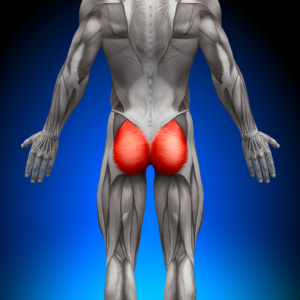
Understanding the Three Gluteal Muscles
The gluteal region is made up of three major muscles — the gluteus maximus, gluteus medius, and gluteus minimus. Together, they play a critical role in stabilizing the pelvis, generating power for movement, and maintaining proper posture. Though often grouped together as “the glutes,” each of these muscles has a distinct anatomical structure and function. Understanding their differences provides valuable insight into how injuries can occur and how targeted treatment can restore balanced movement.
Gluteus Maximus
Origin: Posterior ilium (behind the posterior gluteal line), sacrum, coccyx, and the sacrotuberous ligament.
Insertion: Primarily into the iliotibial (IT) band, with deeper fibers attaching to the gluteal tuberosity of the femur.
Action: The gluteus maximus is the largest and most superficial of the gluteal muscles. Its primary actions are hip extension, external rotation, and abduction of the thigh. It also helps stabilize the pelvis and trunk during standing, running, and climbing.
Common Injuries:
Because the gluteus maximus is heavily involved in power-based movements, it can be strained through activities like sprinting, explosive jumping, or heavy lifting with poor mechanics. Overuse or weakness can also lead to compensations by the hamstrings or lumbar spine, contributing to lower back discomfort or altered running mechanics.
Gluteus Medius
Origin: Outer surface of the ilium, between the anterior and posterior gluteal lines.
Insertion: Lateral surface of the greater trochanter of the femur.
Action: The gluteus medius is primarily responsible for hip abduction and plays a key role in pelvic stabilization during single-leg stance, such as walking or running. The anterior fibers assist with internal rotation, while the posterior fibers assist with external rotation.
Common Injuries:
The gluteus medius is prone to tendinopathy, especially in endurance athletes and individuals who spend long periods sitting. Weakness or dysfunction can lead to pelvic drop (known as a Trendelenburg sign) and overloading of nearby tissues, such as the IT band or lateral knee. Runners often experience gluteus medius irritation when hip stability decreases, resulting in increased strain through the knees or lower back.
Gluteus Minimus
Origin: Outer surface of the ilium, between the anterior and inferior gluteal lines.
Insertion: Anterior surface of the greater trochanter of the femur.
Action: The gluteus minimus works closely with the gluteus medius to abduct and internally rotate the hip. It also helps maintain pelvic alignment and joint integrity by stabilizing the femoral head in the hip socket during movement.
Common Injuries:
The gluteus minimus can develop trigger points or tendinopathy similar to the gluteus medius, often presenting as deep, lateral hip pain. Chronic tension, sitting postures, or repetitive hip loading can contribute to microtrauma. In some cases, irritation of this muscle can mimic sciatic-like pain, radiating down the side of the leg.
Clinical Insight
At Trailblazer Sports Massage, we take a clinical approach to understanding how these muscles function together. A strain, weakness, or fascial restriction in one gluteal muscle can impact the entire kinetic chain — from hip mobility to knee tracking and spinal alignment. Through detailed assessment and anatomy-informed manual therapy, we help restore balanced gluteal function, reduce compensations, and support optimal movement patterns.
If you’re experiencing hip tightness, imbalance, or recurring lower body strain, schedule a session at Trailblazer Sports Massage in Poulsbo. Our hands-on, anatomy-driven approach targets the root cause — so you can move, perform, and recover with confidence.